How to Introduce a New Cat to Your Resident Cat Step by Step
A slow, scent-first introduction plan for cats, how to set up a safe room, what to expect, signs of trouble and when to ask for professional help.

Go slowly. Keep the newcomer in a separate room with its own litter box, food and water, swap scents with bedding, let the cats sniff under the door, then allow short, supervised visual meetings with treats and play. Expect days to weeks. Separate them if you see fighting, and ask your vet or a behaviorist if tension persists.
Cats are territorial, and a new arrival can feel like an invasion. Rushed introductions are the most common cause of lasting tension.
A gradual plan lets both cats build positive associations. Below is a step-by-step approach, along with what to watch for.
Before the new cat comes home
Prepare a separate room for the newcomer with a litter box, food, water, a bed, hiding spots and toys. This gives them space to settle in.
If possible, have the new cat checked by a vet first and keep them apart from the resident until you know they are healthy.
Step 1: scent first
Cats rely heavily on smell. Swap bedding or rub a soft cloth on each cat's cheeks and place it near the other's food.
Feed them on opposite sides of the closed door so they associate each other's smell with something good.
Step 2: see without touching

Once both cats eat calmly near the door, add visual contact:
- Open the door a few centimeters with a barrier or baby gate
- Keep sessions short, with treats or play
- Gradually move food bowls closer together
- End before either cat shows tension
Tip: Swapping which cat has the run of the house for a few hours lets each explore the other's scent without confrontation.
Step 3: supervised meetings
Let the cats share a space with you present. Use wand toys to distract them, reward calm behavior and keep sessions short.
Provide vertical space and several exits so neither cat feels cornered.
Reading the body language
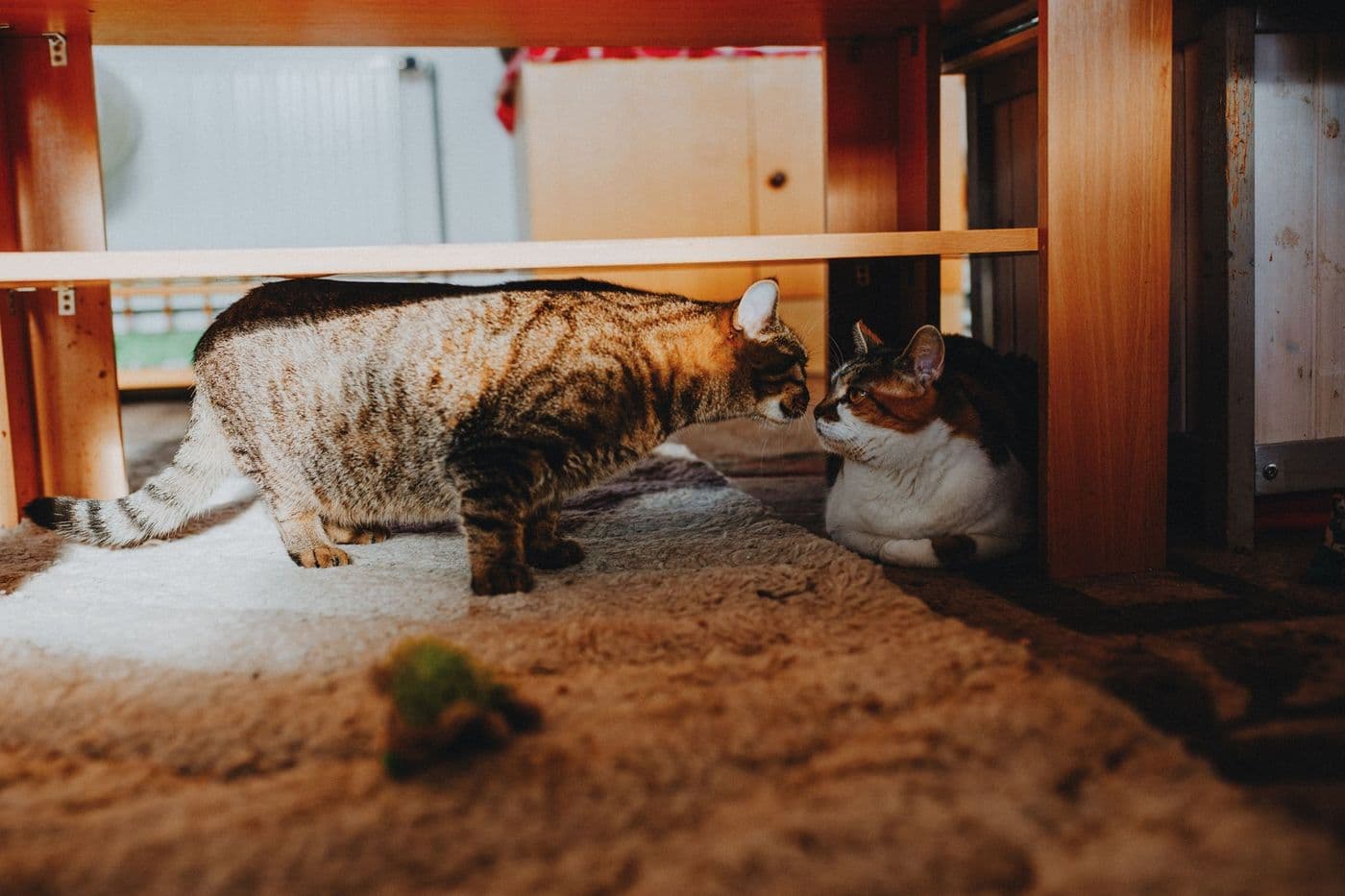
Relaxed signs include slow blinks, soft tails and casual sniffing. Hissing, growling, flattened ears, puffed fur and staring are warnings.
A little hissing can be normal at first. If it escalates, separate them calmly with a barrier or toy, never with your hands.
When to get help
If fights continue, one cat hides constantly, stops eating or avoids the litter box, go back a step and slow down. Stress can cause health problems.
Your vet can rule out medical issues and refer you to a qualified behaviorist if needed.
Frequently asked questions
How long does an introduction take?
From a few days to several weeks, sometimes longer. Let the cats set the pace.
Should cats just fight it out?
No. Fighting can cause injury and long-lasting fear. Separate and restart slowly.
Do I need extra litter boxes?
Yes, ideally one per cat plus one, in different places.
Will they ever become friends?
Many do, some just tolerate each other. Peaceful coexistence is still a success.
Advertisement
Advertisement
Sponsored: today's featured offer →General information only. Check product labels and manufacturer instructions before you start.
Keep reading

Why Does My Cat Meow So Much? Reasons and What to Do About It
Why cats meow, from hunger and attention to stress, aging and health problems, with ways to reduce excessive meowing and when to book a vet visit.

Why Does My Cat Purr? Happy, Hungry and Sometimes Hurting
What purring means, when cats purr for comfort or to ask for food, why some purr when stressed or unwell, and how to read context.

Why Does My Cat Have Zoomies at Night? How to Get Quiet Evenings
Why cats race around at night, how play, feeding and routine can calm midnight zoomies, and when sudden night activity needs a vet check.